The Most Distinctive Section of the Great Wall
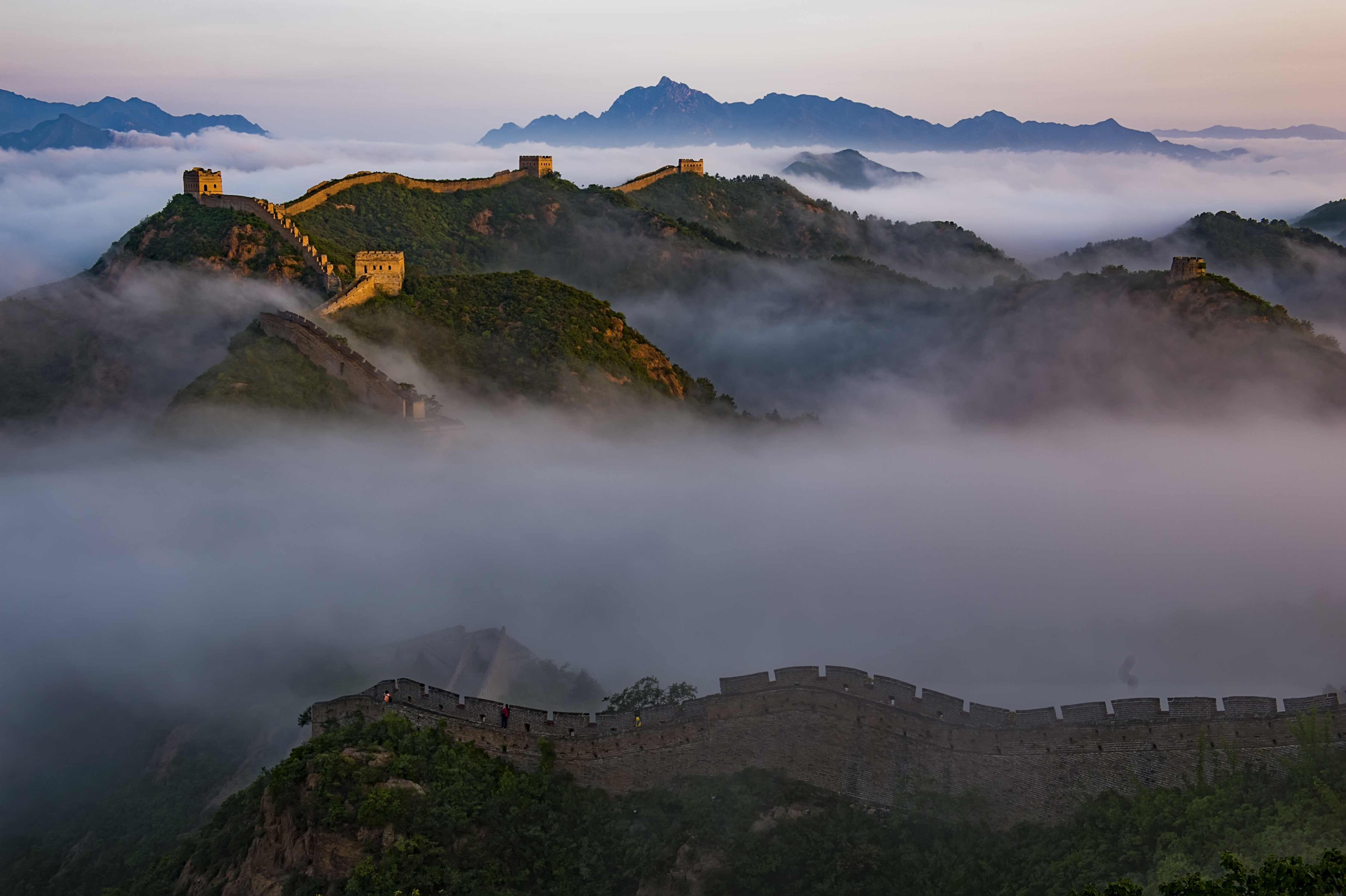
Rising across the Yanshan Mountains between Hebei and Beijing, Jinshanling is celebrated for its dense watchtowers, complete military defense system, refined Ming Dynasty architecture, and magnificent mountain scenery.
Why Jinshanling Stands Apart
Jinshanling is widely admired as one of the finest surviving sections of the Ming Great Wall. It combines strategic military design, unusually dense watchtower placement, rare architectural details, and a landscape that reveals the Wall as both fortress and work of art.
Ming Origins
Construction began in the first year of the Hongwu reign, under the direction of the founding Ming general Xu Da.
Qi Jiguang's Renewal
From the Longqing reign onward, Qi Jiguang and Tan Lun carried out large-scale rebuilding and strengthening.
Watchtower Density
With watchtowers often less than 200 meters apart, Jinshanling shows rare defensive intensity and visual rhythm.
National Heritage
It is a national 5A scenic area, a protected cultural relic, and part of the World Heritage-listed Great Wall.
A Strategic Gateway Between the Capital and the Northern Frontier
Jinshanling Great Wall lies on a branch of the Yanshan Mountains, near the border of Luanping County in Hebei and Miyun District in Beijing. To the east it connects with Simatai, and to the west with Gubeikou. Historically, this region formed a vital passage between the inner lands and the northern frontier.
The Wall here was first built in 1368 by Xu Da, one of the founding generals of the Ming Dynasty. In 1567, after the famous anti-pirate general Qi Jiguang was appointed commander of Jizhen, he and the governor Tan Lun undertook extensive rebuilding on the earlier foundation.
Qi Jiguang applied the principle of building according to terrain and using natural danger as defense. Low hills were reinforced with higher walls; steep ridges were strengthened with watchtowers; and selected sections were fitted with barrier walls, branch walls, and horse-blocking walls. The result was a complete, solid, carefully arranged defense system.
A compact section that concentrates many of the essential architectural forms of the Ming Great Wall.
Military Thought Built into Stone
Before Qi Jiguang's work, the Jizhen defense line was considered vulnerable. During the Jiajing reign, Mongol forces under Altan Khan broke through the frontier and raided the outskirts of Beijing, an event remembered as the Gengxu Incident.
The Ming court recognized the weakness of the defenses in this region. Grand Secretary Zhang Juzheng recommended Qi Jiguang to strengthen the northern border. During his sixteen years in the Jinshanling area, Qi focused on two core tasks: training soldiers and rebuilding the Great Wall into a more reliable defensive system.
His reconstruction transformed Jinshanling into a model of Ming Great Wall architecture. The Wall's rising and falling silhouette, its strong masonry, and its interlocking defensive features still express the strategic logic of "using danger to control the frontier."
The Defensive Art of Jinshanling
Barrier walls, hollow watchtowers, inscribed bricks, and the Qilin screen wall make Jinshanling one of the most architecturally valuable sections of the Great Wall. These features reveal not only military engineering, but also systems of responsibility, craftsmanship, symbolism, and human aspiration.

Barrier Walls
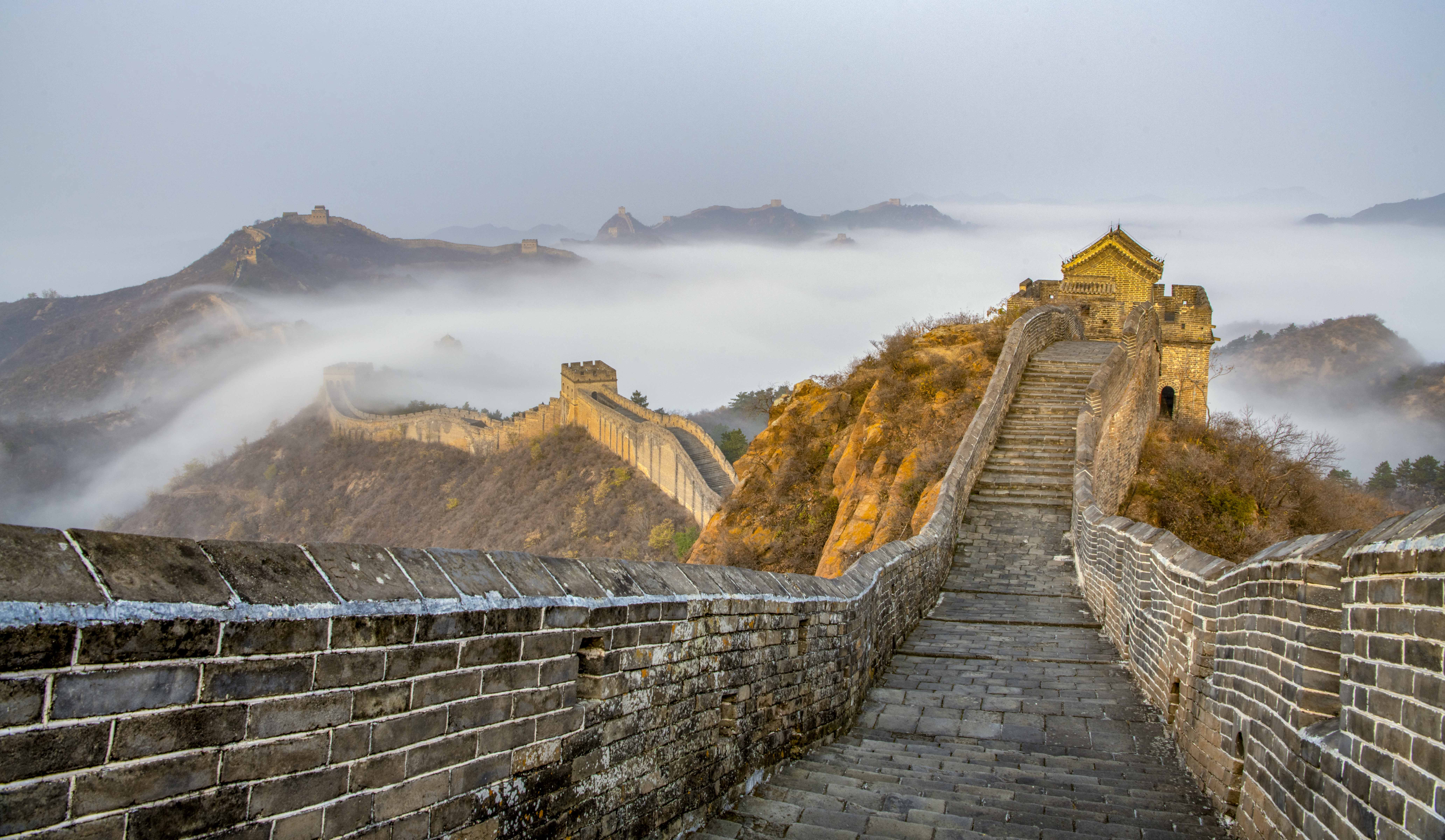
Barrier walls are among Jinshanling's most distinctive defensive devices. Built along the top of the main wall, these small transverse walls provided cover for soldiers if attackers reached the rampart, allowing defenders to resist step by step from protected positions.
Hollow Watchtowers
The hollow watchtower was an important innovation promoted during Qi Jiguang's rebuilding. These towers could store grain and gunpowder, shelter soldiers from wind and rain, and serve as observation and firing platforms during battle.

Inscribed Brick Wall
Between Xiaohuding Tower and Dahuding Tower lies a roughly 500-meter section of inscribed bricks. Many bricks record the year of production and the military unit responsible, such as bricks made by Shandong Left Camp during the Wanli reign. This was an early system of quality control and accountability.

Qilin Screen Wall
At Xiaohuding Tower stands the Qilin screen wall, the only completely preserved Qilin brick carving on the Ming Great Wall. The Qilin, a traditional auspicious creature, symbolizes peace and good fortune, softening the harshness of a frontier fortress with a wish for national stability and human peace.

A Living Example of Ming Great Wall Engineering
Jinshanling was designated a national scenic area in 1982. In 1987, as part of the Great Wall, it was included on the UNESCO World Heritage List. In 1988, it was announced as a major cultural relic site under national protection, and in 2020 it became a national 5A tourist attraction.
Its value lies in the concentration of architectural forms rarely seen together with such clarity: horse-blocking walls, barrier walls, inscribed brickwork, the Qilin screen wall, and the defensive system around Jiangjun Tower. For scholars of the Great Wall, Jinshanling is a physical archive of ancient Chinese military engineering, frontier history, and architectural artistry.
The Great Wall Photographer's Paradise
Because Jinshanling stands deep in the mountains, it avoided many of the major disruptions that damaged other sections. Through the fall of the Qing Dynasty, warlord conflicts, and the War of Resistance, it retained much of its ancient character. Today it is admired for wide views, dense towers, refined construction, and a weathered beauty that still feels authentic.
A Wall Rediscovered in the 20th Century
Before 1980, this section of the Wall was not widely known by the name "Jinshanling." In that year, Pang Bo, a photographer and journalist from People's Pictorial, encountered this remarkably well-preserved ancient Wall during his long-term survey of Great Wall sites.
After decades of observing the Great Wall, he considered this section exceptionally beautiful and distinctive. He gave it the name "Jinshanling" and published a photo series in People's Pictorial. From that moment, a Wall that had been quiet in the mountains for centuries entered public view under the name Jinshanling.

"Among the ten thousand li of the Great Wall, Jinshanling stands apart."
The Spirit of Jinshanling Great WallThe Essence of the Ming Great Wall
Jinshanling is one of the most complete, beautiful, and historically meaningful sections of the Great Wall. Its towers, walls, inscriptions, carvings, ridgelines, and preserved frontier atmosphere reveal the Great Wall as both a military defense system and a monumental work of Chinese civilization.